Integrating Farmers Market Vegetable Icons into Your Creative and Business Workflows
In the landscape of modern digital design and content creation, visual consistency is not merely an aesthetic preference; it is a functional necessity. Whether you are building a brand identity for a local organic grocer, designing educational materials for a nutrition class, or curating social media content for a lifestyle blog, the assets you choose define the clarity of your message. This is where specialized graphic resources, such as Farmers Market Vegetable Icons, become critical components of a streamlined production pipeline. These are not just decorative elements; they are versatile tools that, when integrated correctly, can significantly reduce design time while enhancing professional output.
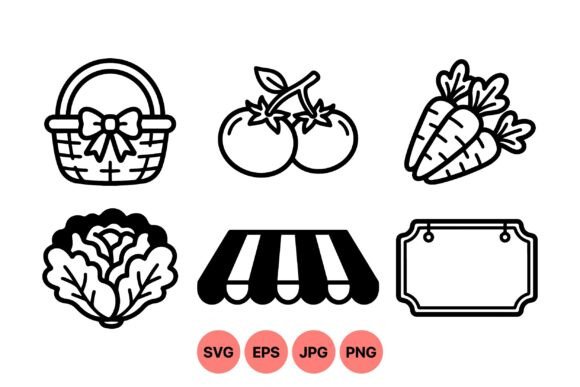
The specific collection featuring black and white vector icons of fresh vegetables—including tomatoes, carrots, lettuce, baskets, market stalls, and blank signs with decorative frames—offers a unique blend of rustic charm and technical precision. Understanding how to leverage this asset pack requires looking beyond the individual images and focusing on their role within your broader creative ecosystem. From initial concept planning to final file delivery, these icons serve as modular building blocks that adapt to various mediums and scales.
Pre-Production Planning and Asset Selection
Before opening any design software, effective workflow begins with strategic selection. When you decide to incorporate Farmers Market Vegetable Icons into a project, you are making a deliberate choice about tone and accessibility. The high-contrast, black-and-white nature of these vectors suggests a clean, timeless aesthetic that avoids the visual noise often associated with full-color photography. This makes them ideal for projects requiring high readability, such as printed menus, instructional handouts, or mobile-responsive web interfaces.
During the planning phase, consider the semantic weight of each icon. A tomato icon might represent freshness in a food blog header, while a market stall could symbolize community engagement in a non-profit newsletter. By mapping out these associations early, you ensure that the icons serve a communicative purpose rather than acting as mere filler. This alignment between visual asset and narrative goal is a hallmark of experienced designers and content creators who prioritize user experience over superficial decoration.
Technical Compatibility and File Management
One of the most significant advantages of this specific download is its comprehensive file structure. The inclusion of SVG, PNG, JPG, and EPS files within a single ZIP folder addresses the fragmented needs of modern multi-platform publishing. Understanding which format to use at each stage of your workflow is crucial for maintaining efficiency and quality control.
- SVG (Scalable Vector Graphics): This is the primary format for web development and digital interfaces. Because SVGs are code-based, they remain crisp at any resolution, ensuring that your carrot or lettuce icon looks sharp on a 4K monitor and a smartphone screen alike. They are also lightweight, contributing to faster page load times—a key factor in SEO and user retention.
- EPS (Encapsulated PostScript): For print professionals, EPS files are indispensable. They allow for infinite scaling without pixelation, making them perfect for large-format outputs like banners, vehicle wraps for food trucks, or high-resolution brochures. Using EPS ensures that the edges of your decorative frames remain smooth and professional.
- PNG and JPG: These raster formats are essential for quick integration into platforms that do not support vector files, such as certain social media schedulers, email marketing tools, or presentation software like PowerPoint. While they lack the scalability of vectors, they offer immediate usability for draft reviews and internal communications.
Organizing these files efficiently before starting your project saves considerable time later. Create a dedicated folder structure that separates vector sources from exported raster images. This habit prevents version control issues and ensures that you always have access to the master files if adjustments are needed mid-project.
Implementation in Design and Branding
Once the technical groundwork is laid, the actual implementation of Farmers Market Vegetable Icons can transform standard layouts into engaging visual narratives. The set includes not only produce but also contextual elements like baskets and blank signs. These contextual icons are particularly valuable for creating cohesive scenes. For instance, placing a tomato icon next to a blank sign with a decorative frame allows you to customize text for specific promotions, such as "Heirloom Tomatoes - $3/lb," without needing to design complex typography from scratch.
Consistency is key in branding. By using a unified style of black and white line art across all touchpoints, you establish a recognizable visual language. This is especially important for small business owners and entrepreneurs who may be managing their own marketing. Instead of hiring a designer for every minor update, you can use these pre-made assets to maintain a professional look across flyers, websites, and packaging labels. The high-contrast design ensures that the icons remain legible even when printed on textured paper or displayed against busy backgrounds.
Enhancing Educational and Informational Content
Educators and bloggers often struggle to find visuals that are both engaging and free from distracting commercial branding. This icon set fills that gap effectively. In a nutrition guide, for example, simple icons of carrots and lettuce can break up dense text, making the information more digestible for readers. The visual cue helps the brain categorize information quickly, improving comprehension and retention.
For digital publishers, these icons can be animated using CSS or JavaScript libraries that support SVG manipulation. A subtle hover effect where a carrot icon slightly rotates or changes opacity can add interactivity to a website without compromising performance. This level of detail demonstrates a commitment to user experience that distinguishes amateur sites from professional platforms.
Workflow Integration and Efficiency Tips
To maximize the utility of these assets, integrate them into your design system or template library. If you use tools like Adobe Illustrator, Figma, or Canva, import the SVG or PNG files into your component library. This allows you to drag and drop icons directly into new projects, ensuring consistent sizing and styling. Over time, this practice reduces the cognitive load associated with repetitive design tasks, freeing up mental energy for higher-level creative decisions.
Additionally, consider the scalability of your workflow. As your project grows, you may need to adapt these icons for different contexts. The vector nature of the SVG and EPS files means you can modify stroke weights, add colors, or combine elements without losing quality. For instance, you might change the black lines to a brand-specific green for a spring campaign, or thicken the lines for better visibility on outdoor signage. This flexibility extends the lifespan of the asset, providing long-term value beyond the initial purchase.
Quality Control and Final Output
Before finalizing any project, perform a rigorous quality check. Ensure that the icons align properly with surrounding text and other graphical elements. Check for consistent spacing and visual balance. Since the icons are high-contrast, verify that they do not create unintended visual vibrations against certain background colors. Testing your designs on multiple devices and print proofs is essential to guarantee that the crispness of the vector artwork translates effectively to the end user’s experience.
By treating Farmers Market Vegetable Icons as integral parts of a structured workflow rather than afterthoughts, you elevate the overall quality of your output. Whether you are a freelancer delivering a client project or a hobbyist creating a personal garden journal, the disciplined use of high-quality vector assets leads to more polished, professional, and effective communication. The combination of artistic charm and technical versatility makes this set a valuable addition to any creator’s toolkit, supporting both immediate needs and long-term brand development.