Integrating Whimsical Fairy Tale Clipart into Professional Creative Workflows
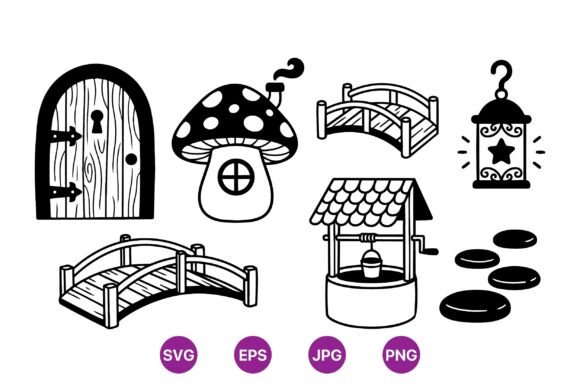
In the landscape of digital design and content creation, assets are rarely just decorative elements; they are functional components that drive engagement, clarify messaging, and establish brand identity. The Whimsical Fairy Tale Clipart collection, featuring hand-drawn vector illustrations of fantasy mushroom houses, stone paths, and garden bridges, represents a specific type of resource that bridges the gap between playful aesthetics and professional utility. For creators, marketers, and educators, understanding how to integrate these black-and-white line art assets into existing workflows is essential for maximizing their value.
This article explores the practical application of this clipart set, focusing on preparation, compatibility, and strategic implementation across various professional scenarios. By treating these assets as modular tools rather than static images, you can enhance efficiency and maintain high-quality output in both digital and print media.
Understanding the Asset Structure and Quality Standards
Before integrating any visual asset into a project, it is crucial to understand its technical foundation. This particular set is delivered as a ZIP folder containing SVG, PNG, JPG, and EPS files. The distinction between these formats dictates how and where the artwork should be used within your workflow.
The core value of this collection lies in its 100% vector SVG and EPS files. Vector graphics are resolution-independent, meaning they rely on mathematical equations rather than pixels to define shapes. This ensures that the intricate details of the chimney, the keyhole in the wooden door, and the curvature of the garden bridges remain sharp at any scale. Whether you are designing a small icon for a mobile app or a large-format banner for a trade show, the quality remains consistent. This eliminates the need for multiple versions of the same image, streamlining file management and reducing storage overhead.
The raster formats, PNG and JPG, serve different purposes. PNGs with transparent backgrounds are ideal for quick web integration where editing capabilities are limited, such as in content management systems or email marketing platforms. JPGs are suitable for contexts where transparency is not required and file size optimization is a priority. Understanding these distinctions allows you to select the right format at the right stage of your production process, preventing unnecessary conversions and quality loss.
Pre-Production: Planning and Conceptual Alignment
Effective use of Whimsical Fairy Tale Clipart begins during the planning phase. When embarking on a new project, such as a children’s book layout, an educational worksheet, or a branding package for a boutique business, consider how the aesthetic of hand-drawn line art aligns with your overall goals. The black-and-white high-contrast style offers versatility, but it requires deliberate placement to ensure visual harmony.
During the brainstorming session, map out where these elements will function as focal points versus supporting details. For instance, the fantasy mushroom house with its decorative lantern can serve as a central motif for a logo or a chapter header. The stone path and curved garden bridges are excellent for creating visual flow, guiding the viewer’s eye through a layout. By defining these roles early, you avoid the common pitfall of adding decorations as an afterthought, which often results in cluttered or disjointed designs.
Additionally, consider the licensing and usage rights associated with the download. Ensuring that the asset fits within your legal framework for commercial or personal use is a critical step in risk management. Once cleared, organize the downloaded ZIP folder immediately. Extract the files into a structured directory, separating vectors from rasters. This simple organizational habit saves significant time during the execution phase, allowing for quick retrieval of specific assets without disrupting creative momentum.
Execution: Integration into Design and Development Tools
The implementation phase is where the technical advantages of vector files become apparent. If you are using professional design software like Adobe Illustrator, CorelDRAW, or Affinity Designer, importing the EPS or SVG files provides full editability. You can adjust stroke weights, modify curves, or recolor elements to match specific brand guidelines. Although the original artwork is pure black and white, the vector nature allows for easy customization. You might choose to keep the high-contrast look for a minimalist aesthetic or add subtle colors to highlight specific features like the lantern or the keyhole.
For web developers and UI designers, SVG files offer distinct advantages. They can be embedded directly into HTML code, allowing for CSS styling and animation. This means the whimsical elements can interact with user actions, such as changing color on hover or animating the smoke from the chimney. This level of interactivity enhances user experience without compromising load times, as SVGs are typically lightweight compared to high-resolution raster images.
In educational content creation, these assets can be integrated into worksheets and activity books. The clear lines of the mushroom house and garden bridges are ideal for coloring pages. Educators and publishers can use the PNG files for digital assignments or the PDF-exported vectors for high-quality print runs. The consistency of the line art ensures that printed materials look professional, reinforcing the credibility of the educational resource.
Post-Production: Quality Control and Consistency
After integrating the clipart into your project, a rigorous quality control process is necessary. Check the scalability of the vectors by zooming in to 400% or more. Ensure that no anchor points are misaligned and that the curves of the bridges and the roof of the mushroom house remain smooth. For raster exports, verify that the resolution meets the requirements of the final medium, typically 300 DPI for print and 72 DPI for web.
Consistency is another critical factor. If you are using multiple elements from the set, ensure that the line weights are uniform across all illustrations. A mismatch in stroke thickness between the stone path and the wooden door can create visual dissonance. Most vector editing tools allow you to standardize stroke properties globally, ensuring a cohesive look. This attention to detail distinguishes amateur designs from professional-grade work.
Furthermore, consider the long-term usability of the assets. Save your working files with layers intact, keeping the clipart on separate layers from text and background elements. This non-destructive approach allows for easy updates or modifications in the future. If a client requests a change in the layout or a different color scheme, having organized layers enables quick adjustments without starting from scratch.
Strategic Use Cases Across Industries
The versatility of Whimsical Fairy Tale Clipart extends beyond traditional graphic design. Here are several practical applications across different sectors:
- Marketing and Branding: Small businesses in the craft, bakery, or childcare industries can use these illustrations to create a warm, inviting brand identity. The mushroom house can become a recognizable icon on packaging, social media posts, and business cards.
- Education and E-Learning: Teachers and course creators can use the stone path and bridges as metaphors for learning journeys. These visuals can break up text-heavy modules, making content more engaging and easier to digest for students of all ages.
- Publishing and Writing: Authors and self-publishers can incorporate these elements into book covers, chapter dividers, and interior illustrations. The black-and-white style complements text well, adding visual interest without overwhelming the reader.
- Web and App Development: Developers can use the SVG files for scalable icons and interface elements. The whimsical nature adds personality to user interfaces, enhancing emotional connection with the product.
Optimizing Workflow Efficiency
To maximize efficiency, create a library of pre-styled versions of these assets. If you frequently use the mushroom house in a specific color palette, save a customized version as a template. This reduces repetitive tasks and ensures brand consistency across multiple projects. Additionally, utilize cloud storage solutions to share these assets with team members, ensuring everyone has access to the latest versions and maintaining a single source of truth.
Collaboration tools often support SVG previews, allowing stakeholders to view and comment on designs without needing specialized software. This facilitates smoother feedback loops and faster approval processes. By integrating these assets seamlessly into your collaborative workflow, you reduce friction and accelerate project timelines.
In conclusion, the Whimsical Fairy Tale Clipart set is more than a collection of images; it is a versatile tool that, when understood and applied correctly, enhances the quality and efficiency of creative work. By focusing on technical compatibility, strategic planning, and consistent execution, professionals can leverage these hand-drawn vectors to create compelling, high-impact content across various mediums. The key lies in treating each element as a flexible component of a larger system, adapting it to meet the specific needs of each project while maintaining the integrity of the original artistic vision.