Integrating Protea Flower Line Art into Modern Creative and Business Workflows
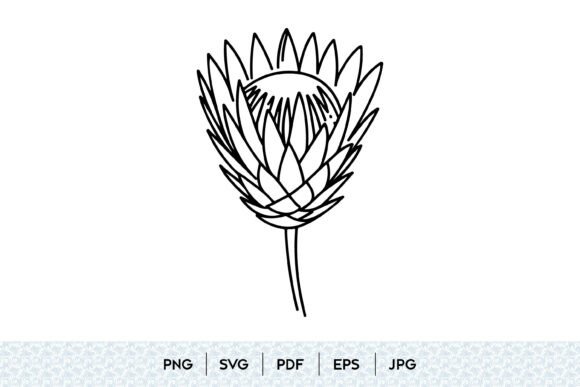
In the landscape of contemporary design, clarity and elegance often outweigh complexity. Protea flower line art has emerged as a versatile asset for creators who value precision and aesthetic minimalism. Unlike dense botanical illustrations that require heavy color palettes and intricate shading, line art strips the subject down to its essential contours. This reductionist approach makes it an ideal component for a wide range of professional applications, from branding packages to educational materials. Understanding how to effectively integrate these assets into your workflow can significantly enhance productivity while maintaining high visual standards.
The protea, with its distinctive geometric structure and exotic appeal, serves as a powerful symbol in visual communication. When rendered as floral line art, it transcends mere decoration to become a functional design element. Whether you are a marketer launching a new product line, an educator preparing course materials, or a small business owner curating social media content, the strategic use of botanical illustration can elevate your output. The key lies not just in selecting the right image, but in understanding the technical specifications and practical implementation strategies that ensure seamless integration across various platforms.
Selecting the Right File Formats for Your Workflow
One of the most critical decisions in any digital design process is file format selection. When acquiring protea flower line art, you will typically encounter a suite of formats including SVG, PNG, EPS, JPG, and PDF. Each serves a distinct purpose in the production pipeline, and choosing incorrectly can lead to quality loss or compatibility issues later in the project.
- SVG (Scalable Vector Graphics): This is the gold standard for web design and digital interfaces. As an editable svg, it allows you to manipulate individual paths, change stroke weights, and adjust colors without losing resolution. For developers and UI designers, this format ensures crisp rendering on any screen size, making it indispensable for responsive websites and mobile apps.
- EPS (Encapsulated PostScript): Ideal for print professionals, EPS files are vector-based and compatible with industry-standard software like Adobe Illustrator. If you are designing large-format banners, packaging, or high-end brochures, starting with an EPS ensures that your floral vector remains sharp regardless of scaling.
- PNG (Portable Network Graphics): Best for quick digital implementations where transparency is required. A high-resolution PNG of a black line art protea can be dropped directly into presentation slides, social media posts, or word processing documents without the need for complex editing software.
- JPG and PDF: These are primarily for final delivery or preview purposes. JPGs are suitable for web thumbnails where file size is a concern, while PDFs are excellent for sharing printable artwork with clients or printers who need a fixed-layout document.
By organizing your asset library according to these formats, you streamline the retrieval process. Instead of searching for a generic image, you can quickly locate the specific file type needed for the current task, reducing friction in your creative process.
Enhancing Brand Identity and Marketing Materials
For entrepreneurs and marketers, consistency is paramount. Protea illustration offers a unique blend of tropical allure and modern sophistication that can anchor a brand’s visual identity. The clean lines of minimalist flower designs align well with contemporary aesthetics, appealing to audiences who appreciate understated elegance.
Consider the application of line drawing elements in your marketing collateral. A contour drawing of a protea can serve as a subtle watermark on invoices, adding a touch of professionalism without distracting from the text. In email newsletters, using floral clipart as section dividers helps guide the reader’s eye through the content, improving readability and engagement. Because these assets are often monochrome, they integrate seamlessly with existing brand color schemes, requiring minimal adjustment.
Moreover, printable artwork featuring protea motifs can be used for physical touchpoints. Business cards, letterheads, and packaging inserts benefit from the tactile quality of fine lines. When working with printers, providing vector files ensures that the botanical sketch retains its integrity, avoiding the pixelation that often plagues raster images in small print runs.
Educational and Editorial Applications
Educators and publishers frequently require visuals that are informative yet unobtrusive. Botanical art in line form is particularly effective in textbooks, worksheets, and online courses. A hand drawn flower outline allows students to focus on the structural anatomy of the plant without the distraction of vibrant colors. This is especially useful in biology lessons where labeling parts of the flower is required.
In editorial design, modern line art can break up dense text blocks, providing visual relief for readers. An abstract flower or wildflower art piece can set the tone for an article on nature, sustainability, or wellness. The versatility of digital artwork means that editors can easily resize and reposition these elements to fit varying column widths and layout constraints. Furthermore, using nature inspired graphics can enhance the thematic coherence of a publication, reinforcing the message through visual cues.
Streamlining Production with Editable Assets
Efficiency in creative workflows often depends on the adaptability of your resources. Editable svg files empower designers to customize protea flower line art to fit specific project requirements instantly. Instead of creating a new illustration from scratch, you can modify an existing floral design by adjusting the stroke width to match other elements in your composition. This capability is crucial for maintaining visual harmony across diverse deliverables.
For instance, if you are developing a cohesive social media campaign, you might need variations of the same tropical flower icon. With vector assets, you can create a filled version for one post and an outlined version for another, ensuring variety while preserving brand recognition. This level of control reduces turnaround time and allows for rapid iteration based on feedback.
Additionally, one line drawing styles offer a unique artistic flair that can differentiate your work. These continuous line artworks are trendy and visually striking, making them perfect for aesthetic artwork used in lifestyle blogs or influencer collaborations. By incorporating such distinctive styles, you add a layer of creativity that resonates with modern audiences seeking authentic and artistic content.
Quality Control and Long-Term Usability
To ensure the longevity and effectiveness of your design assets, rigorous quality control is essential. When sourcing protea flower line art, verify that the lines are smooth and closed properly, especially in vector formats. Gaps in paths can cause issues when filling colors or cutting vinyl for physical products. Check the resolution of raster files like PNGs and JPGs to ensure they meet the minimum requirements for your intended use, typically 300 DPI for print and 72 DPI for web.
Organizing your library with descriptive metadata facilitates future retrieval. Tagging files with terms like botanical illustration, exotic flower, and modern floral helps in quickly locating relevant assets during tight deadlines. Establishing a standardized naming convention also prevents confusion among team members, ensuring that everyone accesses the correct version of a file.
Finally, consider the licensing terms associated with your creative artwork. Ensure that you have the appropriate rights for commercial use if the assets will be part of products for sale or client projects. Investing in high-quality, properly licensed floral printable resources protects your business from legal risks and supports the artists who create these valuable tools.
By treating Protea Flower Line Art as a strategic component of your design toolkit rather than just a decorative afterthought, you unlock new possibilities for efficiency and aesthetic refinement. Whether you are refining a brand identity, enhancing educational materials, or streamlining digital content creation, these versatile assets provide the foundation for professional and impactful visual communication.